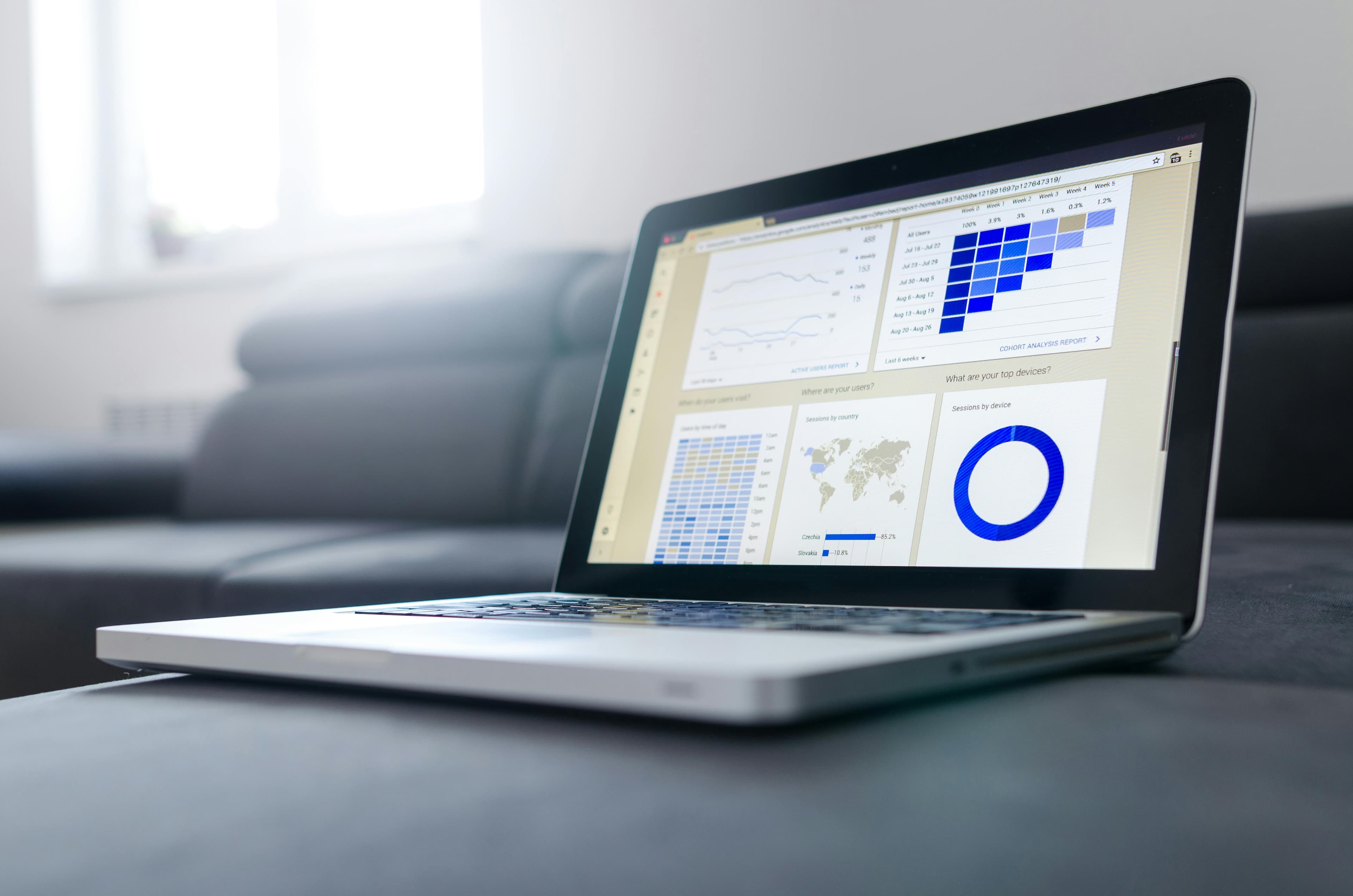
Every business today has a dashboard. Sales numbers, website traffic, customer counts, revenue trends — all neatly visualised in colourful charts, updated in real time, available on any device. It feels like clarity. It feels like control. But here is the uncomfortable truth that most data professionals know and rarely say out loud: a dashboard can be confidently, consistently, and completely wrong — without ever throwing an error.
This isn't about bugs or broken systems. It's about something more subtle and far more dangerous: dashboards that technically work, but quietly mislead the people relying on them.
"The most dangerous data is data that looks right but isn't. At least broken data is obviously broken."
The Illusion of Clarity
There is something deeply reassuring about a well-designed dashboard. Numbers in boxes. Lines going up. Percentages with green arrows. It creates a feeling of certainty — that someone, somewhere, has organised the chaos of your business into something understandable.
But that feeling of certainty is exactly the problem. It can cause decision-makers to stop asking questions. And when you stop asking questions of your data, the data stops telling you the truth.
Real-world scenario
A retail company's dashboard shows that online revenue grew 18% last month. The leadership team is pleased. Bonuses are discussed.
What the dashboard doesn't show: the previous month had an unusual dip due to a payment processing outage. The 18% is a recovery, not growth. Compared to the same month last year, revenue is actually down 4%.
The dashboard wasn't lying on purpose. It just wasn't telling the whole story.
The Five Most Common Ways Dashboards Mislead
1. The Wrong Time Window
Comparing this week to last week sounds reasonable — until last week was a holiday, a product launch, or a system outage. Context changes everything. A number only means something when you know what it's being compared to, and why that comparison is fair.
2. Metrics That Measure Activity, Not Outcomes
Many dashboards track what is easy to count, not what actually matters. Website visits, emails sent, meetings booked — these feel like progress. But if those visits don't convert, those emails don't get replies, and those meetings don't close deals, the numbers are telling you about motion, not momentum.
"Measuring the wrong thing perfectly is still measuring the wrong thing."
3. Averages That Hide the Truth
Averages are one of the most abused tools in business reporting. If your average customer spends €200, that sounds consistent — until you discover it's because half your customers spend €50 and the other half spend €350. Those are two completely different customer behaviours, and treating them as one leads to completely different, and wrong, business decisions.
4. Data That Arrives Late Without Warning
In many businesses, data from certain systems — especially sales, finance, or operations — arrives with a delay. A dashboard might show yesterday's numbers as today's. Or last week's as this week's. If nobody flags that delay, decisions get made on outdated information while everyone assumes it's current.
5. Numbers Nobody Has Agreed On
Ask five people in a company how they define "active customer" and you will likely get five different answers. When metrics aren't formally defined and agreed upon, two dashboards in the same company can show different numbers for the same thing — and both teams will defend theirs as correct. They might both be right. And that's the problem.
What Good Data Actually Looks Like
Good data doesn't just show you a number. It shows you a number in context. It tells you what it's being compared to, how it was defined, when it was last updated, and what it doesn't include. It raises questions as much as it answers them.
The best dashboards are built around a simple principle: every metric should have an owner, a definition, and a question it's designed to answer. If you can't name those three things for a number on your screen, that number shouldn't be on your screen.
Key Takeaways for Business Leaders
- →Before trusting any dashboard, ask: what time period is this comparing, and is that comparison fair?
- →Check whether your metrics measure outputs (what happened) or outcomes (what it led to).
- →Averages are rarely the full story. Ask to see the distribution — the spread of the data.
- →Make sure your team has a shared, written definition for every important metric.
- →Treat a dashboard that never surprises you as a warning sign, not a comfort.
The Fix Isn't More Data
The instinct when dashboards feel unreliable is to add more data — more metrics, more charts, more granularity. But more data without better structure just creates more noise. The fix is almost always less data, more carefully chosen and more rigorously defined.
A single metric that everyone in the company understands, trusts, and acts on is worth more than twenty metrics that generate debate and confusion.
The goal of a dashboard is not to display everything you know. It is to surface the few things that most need your attention, so that the people who need to make decisions can make them faster and with more confidence.
"A great dashboard doesn't answer all your questions. It tells you which questions to ask next."
What to Do This Week
You don't need a data team overhaul to start improving how your business uses data. Here are four practical steps any business can take right now:
- →Pick your three most important business metrics and write down, in plain language, exactly how each one is calculated.
- →Check when your dashboard data was last updated — and whether everyone using it knows that.
- →Find one metric on your dashboard that you've never questioned. Ask someone to explain where the number comes from.
- →Replace one vanity metric (something that looks good but doesn't drive decisions) with an outcome metric (something that directly reflects business health).
Data is one of the most powerful tools available to modern businesses. But like any tool, its value depends entirely on how it's used. A dashboard that misleads with confidence is not a data asset — it's a liability dressed up in charts.
The businesses that win with data are not the ones with the most dashboards. They are the ones that have learned to ask better questions of the ones they have.
Hassan Kazemzade
Data Analyst focused on measurement, decision-making, and real-world impact.